Make room for the habits that matter
Movement, everyday meals, proper downtime and time for yourself all belong in a satisfying routine. Explore practical ideas and build a rhythm that works around your real life.

Five parts of everyday balance
There is no single schedule that suits everyone. Our editorial guides cover ordinary decisions, from a morning walk to a screen-free evening. Start with what matters most to you.
Movement and mobility
Walks, desk breaks and short daily routines.
↗02Everyday food
Simple meals, shopping and kitchen planning.
↗03Sleep and downtime
Evening routines and space to unwind.
↗04Work and personal time
Boundaries, relationships and hobbies.
↗05Life after 40
Flexible habits for changing schedules.
↗
Movement that fits into your day
Walking to the station, taking a short break between meetings or moving around the kitchen can all become part of an active daily rhythm. You do not need a complicated schedule to make space for movement.
Choose enjoyable routes and activities rather than treating each outing as another task. A flexible plan is easier to adjust when work, travel or family arrangements change.
Easy shoulder rolls, a gentle stretch and a few steps around the room.
Leave the desk, take the stairs or walk around the block.
Everyday food without the fuss
Good meals do not need elaborate shopping lists. A handful of familiar ingredients, a few convenient recipes and some time to plan can simplify the week.
For breakfast, try oats and fruit or toast with something savoury. Lunch might combine vegetables, grains and a preferred protein; dinner can be whatever the household enjoys cooking together. Food should fit your appetite, budget and cultural preferences.
Everyday food ideas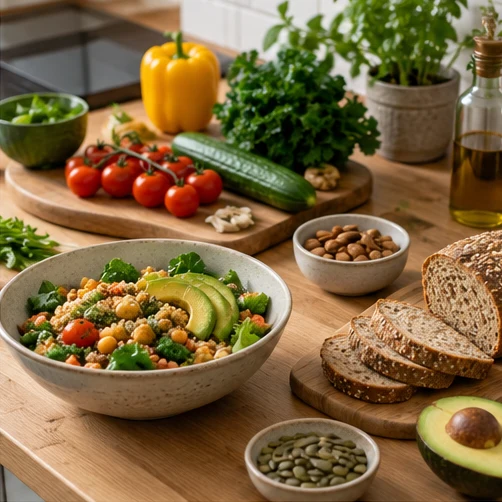

Give your evenings room to breathe
When the working day ends, it helps to have a simple transition into personal time. Close the laptop, write down tomorrow’s priorities and choose an evening activity that feels restorative.
That might mean reading a few pages, cooking, listening to music or talking with somebody you care about. A calmer evening does not have to be perfectly organised.
- Finish unfinished work with a note for tomorrow.
- Put non-essential notifications aside for dinner.
- Make your favourite quiet corner comfortable.
- Leave room for conversation or silence.
Find a better balance between work and life
Messages and meetings have a way of filling every free minute. Setting a clear boundary around working hours can create more predictable space for other activities.
Whether you want to see friends, pursue a hobby or simply have an unscheduled afternoon, the important part is making time in a way that suits your circumstances.
Ideas for personal time
Routines can change as life changes
An age is not a fixed instruction manual. Work, interests, responsibilities and available time can change in different ways for different people.
Explore straightforward ways to keep movement, meals, outings and leisure in your week. Small adjustments may be more practical than turning everything upside down at once.
Read our guides for 40+Find your rhythm for the week
Use this as a starting point, not a set of rules. Adapt the plan around weather, family and work.
Walk part of the journey home.
Make a simple vegetable-based dinner.
Try a brief morning mobility routine.
Catch up with a friend.
Set aside time for a book.
Explore a longer outdoor route.
Prepare a flexible plan for the week.
Latest from the journal
MovementA ten-minute morning movement routine
Simple ideas for the first part of the day.
22 October 2026Frequently asked questions
Where is a good place to start?
Choose one familiar part of your day, such as your lunch break or your journey home. Make a small change that fits your calendar, then adjust it after a week.
What if my timetable changes every week?
Keep two or three options available. A short walk or a quick meal plan can be moved without disrupting everything else.
Where can I find ideas for winding down?
Our rest section and evening routine article have practical examples involving hobbies, time away from work and simple changes at home.
Can I send an article suggestion?
Yes. Use the contact form and tell our editors which subject you would like to see covered.
Important note
Rytm Men provides general educational information. Articles are not personalised professional advice. For individual health questions, consult an appropriately qualified professional.
Have a question or suggestion?
Get in touch with the editors about an article, a topic you would like covered or an idea for the journal.
Leave your email address so we can reply if a response is needed.